How we remaster a label
01 Photography
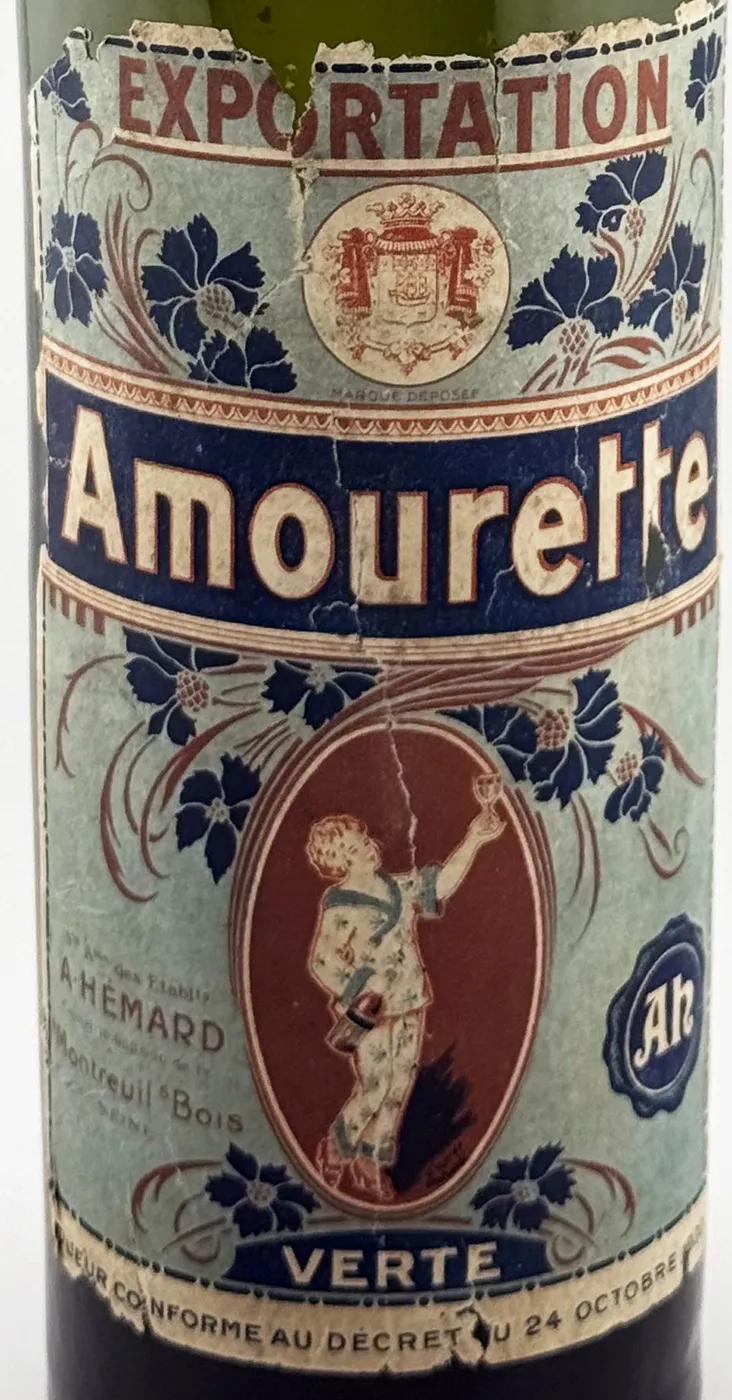
Each bottle is photographed in a studio against a white background, following the same procedure. The bottle remains intact: nothing is opened, and no label is removed.
02 Isolating the label
The label is isolated from the rest of the photograph without retouching. Tears and faded colours are left as they are. This image serves as the reference throughout the process, with each stage checked against the original.
03 Blueprint
The outlines, ornaments and lettering are mapped and measured. The text is transcribed exactly as printed, then translated, and its position is recorded.
This detailed layout, called the blueprint, provides the basis for redrawing the label. It also helps identify the label’s traits.
04 Remaster
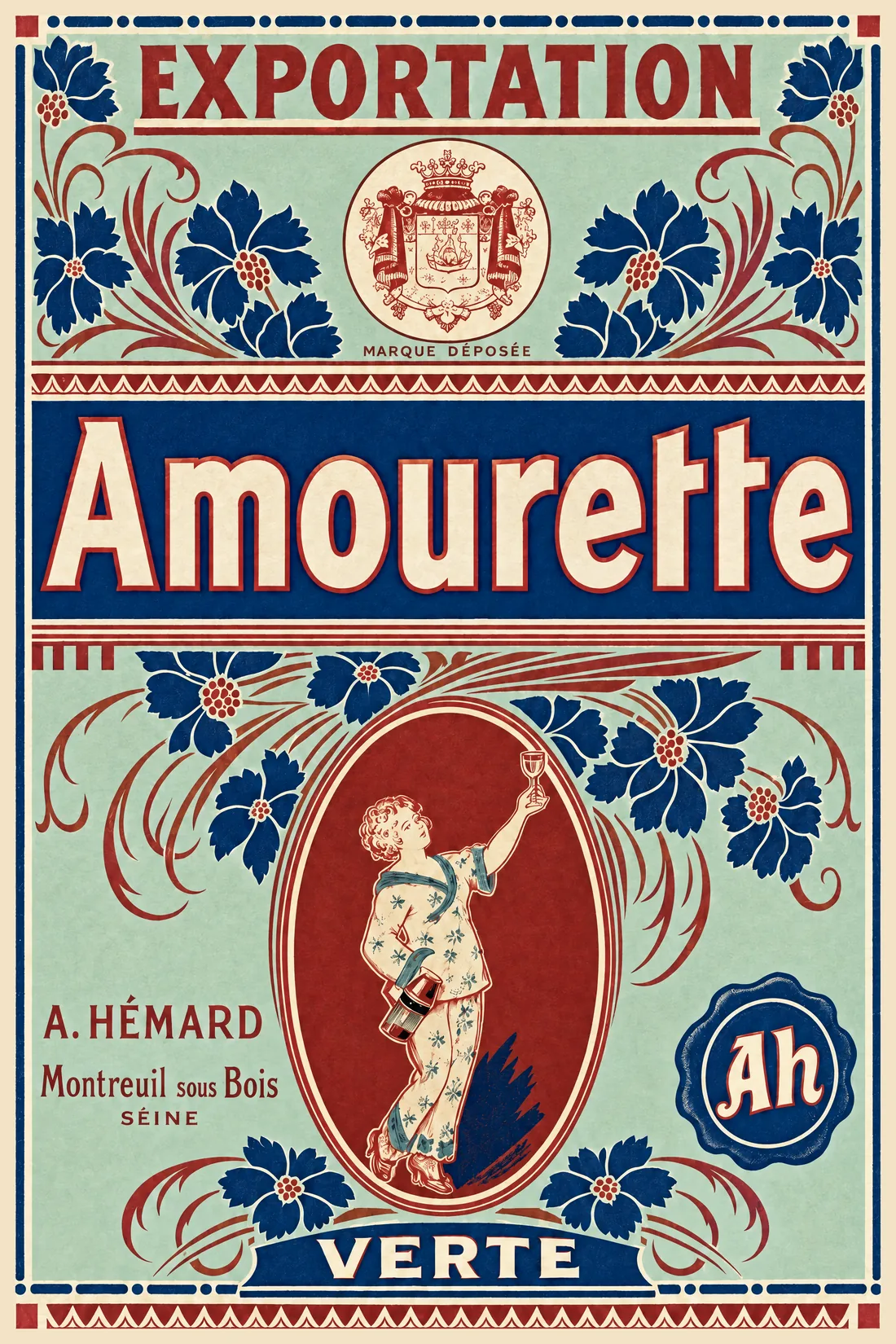
Using the blueprint, the label is redrawn using an AI-assisted process, in high resolution and in the 2:3 format used for the print. The text, layout and colours remain as faithful as possible to the original.
Rebuilding damaged areas and adapting the design for printing can introduce differences. We keep the original bottle photograph alongside each remaster, in its catalogue entry and NFT metadata, so the two can be compared.
05 History
We research the producer’s history using library archives, museum collections, heritage records and historical newspapers.
We only include information supported by a source and linked to the label through a name, address or product.
- 1926André Hémard buys the Pernod Fils brand and merges his business with it: the Établissements Pernod
- SourceInventaire général du patrimoine culturel, Bourgogne-Franche-Comté
Tied to the label by
A. HÉMARD
Montreuil sous Bois · SEINE
06 Archive
Each label is associated with an NFT on Ethereum. The remaster and its metadata are stored on IPFS.
The full archival record is stored on Arweave: the bottle photograph, blueprint, transcription, history and master file. Each file has a SHA-256 hash that allows its integrity to be checked.
Ethereum
The NFT
The label’s number, name and traits, along with its holder’s address.
IPFS
Image and metadata
The remaster and its description, identified by an address derived from their content.
Arweave
The full record
The master file and the label’s supporting documents, with a SHA-256 hash for each file.
Questions about the process
What is the blueprint?
It is a detailed layout created from the isolated label photograph. It records the outlines, ornaments and lettering, including their positions and dimensions. It also brings together the label’s text and its translations. It serves as the reference for redrawing the label and identifying its traits.
What are IPFS and Arweave used for?
They are the two networks used to store the archive. On IPFS, a file’s address is derived from its content: if the content changes, so does the address.
Arweave is designed for long-term file storage, with a one-time storage payment. This allows the archive to be accessed independently of lastlabels.art.
What is a SHA-256 hash used for?
It is an identifier calculated from a file’s contents. Even a tiny change, such as a single pixel, produces a different hash.
Each file in the archive has its own hash. Anyone can recalculate it and compare it with the reference hash to check that the file remains unchanged.
What is the master file?
It is the full-resolution remaster used to produce the prints. The images displayed on the website are smaller, web-optimised versions of this file.
What does the NFT contain?
It contains the label’s number, name and traits, along with links to its image and full archival record. Ethereum records which address holds the NFT.
Buying the NFT does not include the bottle or the original paper label, and does not transfer copyright.